Mr. Watson

The man was of average height
Grey hair, cropped tight around a cue ball top
He sauntered into his math classes
His eyes intently scanned the room
They couldn’t be ignored

When they had you, you were in lock step
His caring captured you, his energy engaged
The understanding intensity inviting your attentivity
It feels like he’s happy I’m here
So, I’m happy I’m here

His words, actions and open heart
Told us all that this learning was important
As struggles unfolded
He’d appear by your side
A parachute for any freefall out the door

By good chance he was the outdoor ed guy
Advocated for my place when I wouldn’t try
Changed my sense of what learning could be
Should be and would be
From this kind Sir, I was awakened
To possibilities and place for my education


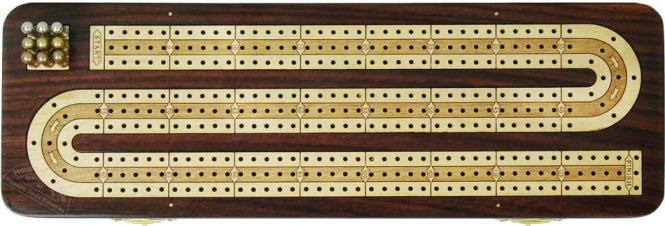
The Crib Game

continous_cribbage_sw_front

15 – 2

15 – 4

15 – 6

And a pair for 8

The dreaded skunk line looms

The subtle, embedded smell of cigarette smoke

Will I ever beat him?

Frank J. Henry leaves

To his shop

Victorious again.

Stories are so important. They shape our place, they are our place, they place us.

What does place mean to you?

I suppose there are a few questions that could follow the title of this post… What is place? Can you have more than one meaning? Is place a tangible thing or an experience? Do you create place? How does place change? I’m not sure how to answer these questions or if they are in fact answerable. As I think about place-based learning and wrestle with ideas about it’s potential for students, I was challenged by a critical friend to reflect on what place meant to me. Hmmmm, hence the questions. I am happy to have these questions swirl in my head as they are deepening my interest in the exploration of place (based learning). As I dug into Naomi Radawiec’s thesis: Exploring our Experiences with Place-based Learning I was struck by the term embodied knowing. Naomi wrote it is “When you experience a place through your senses…through your body.” This was powerful to me; the notion that place is sensory spoke to my feelings about place being multi-dimensional and malleable. I wanted to think more about embodied knowing and found a conference paper titled Embodied Knowing: Getting Back to Our Roots and in the first paragraphs read:

Embodied knowing is our first and most primitive way of experiencing the world. As infants, in cultures around the world we learn first through our bodies. Yet, in western culture this way of knowing is de-emphasized as we enter formal school. We are made to sit in chairs and be still. In higher education this way of knowing is all but absent. It is as if we are being educated from the neck up.

My feeling is that there are deep connections between our sensory experience of the world and our conception of place. I think, for me, place is experience in and of the world. It is the connections to the sights, sounds, tastes, touches, smells, feelings of our surroundings, of our community, of our family. It is the weaving of these connections through time that shape our conception of place and continue to create it. Is then seeking opportunities for creating place the paramount work of education?


My bare feet leave the concrete and I step onto the worn, grooved timbers. My feet are moist with sweat and leave trailing imprints as the dust and sand clings to my soles. The high morning sunlight shoots through the x patterned lattice of the bridge walls and causes me to blink. The warmth cuts through the openings and caresses my left temple with every other step. I stop and turn toward the sun. I push my head through one opening just left of the mid pier. Looking straight down there are clam swirls, gently spiraling in the jet black of the water. The heat of the sun is on the top of my head, the cool of the water rising to my face. I push my shoulders through, then my arms one after another. I turn to my left side and pull my hip onto the edge. I teeter over the water in this prone position, pull my legs in, force them through, and in that moment twist and sit on the ledge. The bridge wants to let me go. I draw in a deep breath and shove off into the air that instantly rushes along my bare back. Only a split second to the loud rush of Guinness bubbles surrounding me, then silence. No direction, but I am moving. Forward? Up? My head breaks free of the surface and the silky water is moving me to where it wants me to go. Away. Kick, kick, kick and I slow. The current drags me to the coarse grey shield rock. I reach out and hold, my body swings around, my feet connect and I look up.

Place based learning

I have been doing a lot of questioning at the moment as i suppose is the point of this blog. I am wondering what questions are important to move forward on; thinking about the many things that I value and want to see develop at my school, in education in general, and particularly for the students I serve. I have been reading Brene Brown’s Daring Greatly and I am enthralled by the research and insights into vulnerability and shame. Her writing has guided my thinking about what is truly important for our students, parents, teachers and schools to a place where I understand that we must actively engage, be vulnerable and demonstrate that value to those we work with and for. It is also an imperative to actively understand shame’s impact in our schools and in our lives to avoid it’s corrosive, door closing effects. Brown’s analogy of Minding the Gap is powerful because it compels us to reflect on the actions we take and the behaviours we demonstrate; do they align with the values we hold and espouse?

I have been wondering many more things.

How do we leverage the power of a growth mindset to create a culture where students are in charge of their learning and can answer the questions Judy Halbert and Linda Kaser’s Spirals of Inquiry urges us to keep asking: Where are you going with your learning? How are you doing with your learning? and Where are you going next with your learning?

How do we communicate with students about how they are doing with their learning?

How do we share student learning? How do students share their learning?

How could project-based learning foster and sustain student engagement and support achievement?

How do we design and use feedback as a crucial component of assessment for learning practice in all classrooms?

How could a deliberate focus on inquiry at the school, classroom, student level impact achievement?

How are we connecting the community to the school and the school to the community? What is the purpose of such connection?

These are simply a few of the questions that have spinning around in my head lately. Choosing a path with heart (see Research that Matters: Choosing a Path with Heart by Cynthia Chambers)  has been an ongoing theme and piece of advice. As I dig into some of the research around these topics, I have had the opportunity to hear a wide variety of speakers address my MEDL cohort describing their research. One such presentation was from Naomi Radawiec. She spoke about her experiences with place based learning and her research on the topic. She connected the idea of place from a personal to a community level and shared her story from school in Squamish. Her story brought me back to my place, certainly back to my Wonder from the home page of this site, back to my early experiences of learning, and returned me to choosing a path with heart. I am not sure where that path leads, or that there is any end point to it. I am sure about it having my heart.